


Make Thrifted Decor Look Lavish with IOD Transfers

Our dear friend and Artisan, Lynne Brundage, always seems to have the most enchanting stash of thrifted treasures and little forgotten pieces just waiting to be all vintaged up. We absolutely LOVE how her latest project turned out and the best part is Lynne’s tutorials are so easy to follow, you’ll feel like she’s right there at the table with you.
This time around, Lynne is upcycling a set of 1960s bells using the Winter Botanist Transfer, Santa’s Hollow Transfer, and some delicious details from the Trimmings I Mould. In the supplies list, we’ve noted exactly what she used, but we encourage you to play and swap things out—maybe a different transfer, a favorite mould, or a glaze you’ve been dying to try.
And please remember, don’t be too careful about it all. Just PLAY! Most of the time things can be remedied if there’s an issue, and more times than not it ends up being a happy accident and you discover wonderful new things!
IOD Products Needed:
Other Supplies:
- White Chalk-Type Paint*
- Gold Wax
- Dark Glaze
- Thick & Quick Glue
- Water-Based Top Coat
*we used a chalk-type paint in this tutorial, but there are many brands and types of paint, talk to your stockist to learn which one is right for you!
Step-by-Step Guide
STEP ONE: PREP & PAINT YOUR BELLS
Start by gently removing any old wiring or accents from your bells so you’re working with a clean base. Once they’re prepped, brush on a bonding primer to help your paint really grip. Let it dry completely before moving on.
Next, give your bells a few coats of white paint to create a soft, neutral canvas for those intricate Transfers to gleam. We recommend using a paint with a built-in topcoat so your pretty new finish holds up beautifully. Allow time to dry completely.

STEP TWO: PREP & APPLY TRANSFERS
Cut and layer bits from the Winter Botanist and Santa’s Hollow Transfers to build a vintage, whimsical scene on each bell. We like to play around with the pieces on the table until the composition feels just right.
Curved surfaces like bells can be a bit finicky, so take your time. Start in the center and gently work your way out, easing the transfer into place and smoothing any fussy spots as you go.
If you get a few tiny cracks or breaks, don’t panic—they just add to the character. Once everything is where you want it, use the backing paper to burnish the transfers so they’re fully adhered.


STEP THREE: CAST & APPLY MOULDS
Using the Trimmings I Mould, choose a narrow border to dress up the bottom edge of your bells. Cast enough length to wrap around each bell, and simply trim off any extra as you go. Secure the moulded trims with a good glue, pressing them into place, and let everything dry before moving on.

STEP FOUR: FINISH WITH GLAZE & GOLD WAX
To give your bells a vintage charm by brushing a glaze over the surface. Gently wipe back the excess with a damp paper towel or rag. Let it settle into the nooks and crannies for a beautifully finish.
For a little glow-up, brush a touch of gold wax over the trimmings. It catches on the raised details and brings out the most lovely, lustrous details.


STEP FIVE: ACCESSORIZE YOUR BELLS
Lynne finished the whole look by adding a sweet string of wooden beads to the top of each bell. She then gathered some greenery, wired it together, and tied on a finishing bow for a perfectly festive flourish.


Isn’t it amazing how a dusty little set of 1960s bells can turn into something this special with just a bit of paint, a few Transfers, and some Mould trim? That’s the real takeaway from Lynne’s project—once you get into the rhythm of prep, layer, detail, and finish, you can walk into any thrift store and start seeing possibilities everywhere. Vintage frames, cookie tins, wooden boxes, chunky candlesticks, even dated lamp bases…all of them are just waiting for a fresh coat of paint, a pretty Transfer, and a swipe of glaze and gold wax.
If you're just kicking off your creative journey, have no fear — our Product 101 pages are packed with straightforward techniques to set you up for success. We're thrilled to accompany you as you explore and create. For more how-tos and creative inspo, make sure to browse through the rest of our blog.
Once you've crafted your final piece, share it with our Facebook Creative Tribe! This community is not just a showcase but also a supportive hub for when you hit those creative roadblocks. And remember, your local stockist is always ready to assist with IOD supplies and expert advice. We're excited to see what you'll bring to life!
 ×
×
popular
- How to Make a 3D Swan Figurine with the IOD Swans Mould
- Thrifted Stool + Lamp Makeover with the IOD Fern Fables Transfer
- How to Apply IOD Athenaeum Gilded Transfer to Colored Glass Bottles
- From Ugly Duckling to Gorgeous | Black Dresser Makeover with IOD Marché des Fleurs
- 5 Creative Ways to Use One Decorative Stamp

Framed in Beauty | How to Create Vintage-I...
Pin this article to save for later If you've ever walked past an antique shop window, spotted a gorgeous gilded frame, and thought, 'I could make that, ' this project is about to prove you...
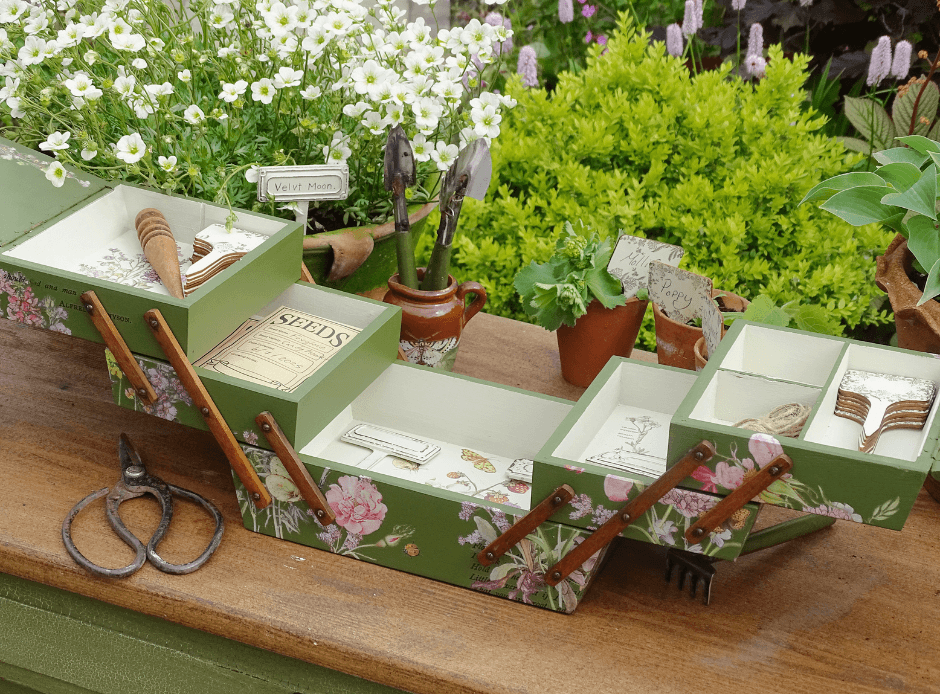
HOW TO MAKEOVER A VINTAGE STORAGE CADDY WI...
Pin this article to save for later If you're anything like us, you can't resist giving a beautiful vintage find a second life. In this project, our talented IOD Artisan Jonathon Marc Mendes transforms a...
